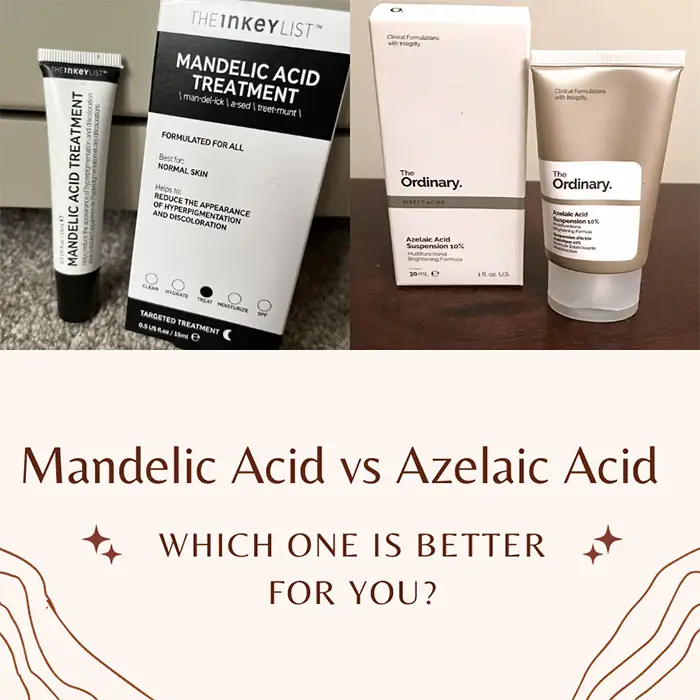
Mandelic Acid vs Azelaic Acid: Which One Should You Choose?

If you are someone who has been looking for a solution for acne, hyperpigmentation, or anti-aging, chances are you have come across mandelic acid and azelaic acid. Both of these acids have been gaining popularity in the skincare industry for their unique benefits. However, if you are wondering which one to choose, this article will […]

Mandelic Acid vs Azelaic Acid: Which One Should You Choose? Read More »
The Powerful Benefits of Azelaic Acid for Clearing Blackheads

Blackheads are a common skin concern that can be frustrating to deal with. They occur when hair follicles become clogged with dead skin cells, oil, and other debris, resulting in a small, dark bump on the surface of the skin. While blackheads are not typically painful or dangerous, they can be unsightly and difficult to

The Powerful Benefits of Azelaic Acid for Clearing Blackheads Read More »

The Complete Guide to Using Mandelic Acid: Benefits, Uses and FAQs

Mandelic acid has been gaining popularity in recent years for its numerous benefits for the skin. It is a gentle exfoliant that can help with acne, fine lines, and uneven skin tone. If you’re wondering how often to use mandelic acid or if it’s safe to use every day, you’ve come to the right place.

The Complete Guide to Using Mandelic Acid: Benefits, Uses and FAQs Read More »

The Seborrheic Dermatitis Diet: Foods to Avoid and Foods to Eat

If you struggle with seborrheic dermatitis, you know how frustrating the flare-ups can be—itchy, flaky, inflamed skin, especially on your scalp, face, and chest. While the exact cause of this condition isn’t fully understood, many people find that what they eat plays a role in how their skin reacts. So, can diet really make a

The Seborrheic Dermatitis Diet: Foods to Avoid and Foods to Eat Read More »

Azelaic Acid for Fungal Acne: How it Works, Benefits and Side Effects

Fungal acne is a skin condition that can be difficult to diagnose and treat, however, it’s important to address it in order to keep your skin healthy. Luckily, azelaic acid is an effective, natural treatment option for fungal acne. In this blog post, we’ll explore how azelaic acid works and the potential benefits and side

Azelaic Acid for Fungal Acne: How it Works, Benefits and Side Effects Read More »

Ingredients and Products to Avoid for Seborrheic Dermatitis (and What to Use Instead!)

Flaky skin, redness, itchiness—seborrheic dermatitis can be relentless. If you’ve tried everything and still experience frustrating flare-ups, the culprit might be closer than you think. Everyday products like shampoos, moisturizers, and even makeup could be secretly aggravating your skin. But don’t worry—we’ve got you covered. In this guide, you’ll discover the ingredients and products to

Ingredients and Products to Avoid for Seborrheic Dermatitis (and What to Use Instead!) Read More »

Sesame Seed Oil for Hair: The Ultimate Guide to Benefits and Usage

Hair, like skin, needs to be appropriately cared for to ensure it remains healthy in the long run. Building an effective hair care routine is no longer difficult, thanks to the abundance of products on the market. However, many people turn to age-old remedies and medicinal ingredients to replenish and revitalize their hair. Oiling is

Sesame Seed Oil for Hair: The Ultimate Guide to Benefits and Usage Read More »

Fungal Acne: Which Ingredients to Avoid and Which Ones to Look For

Fungal acne, also known as Malassezia (Pityrosporum) folliculitis, is a type of skin condition that occurs when yeast infects the hair follicles. Unlike regular acne, which is caused by bacteria and oil buildup, fungal acne is caused by an overgrowth of yeast that naturally lives on the skin. Fungal acne can be difficult to treat

Fungal Acne: Which Ingredients to Avoid and Which Ones to Look For Read More »

Azelaic Acid for Seborrheic Dermatitis: Benefits, Research, and Tips

Seborrheic dermatitis is frustrating—redness, itchiness, and flaking can be hard to manage. Azelaic acid, a naturally occurring compound with anti-inflammatory and antimicrobial properties, is gaining attention as a treatment. But does it really work? The short answer: Yes, it can help. Studies show that azelaic acid may reduce inflammation, calm skin, and tackle yeast overgrowth—all

Azelaic Acid for Seborrheic Dermatitis: Benefits, Research, and Tips Read More »

Caprylic Acid for Seborrheic Dermatitis: Does It Really Work?

If you’re exploring caprylic acid as a treatment for seborrheic dermatitis, you’re probably looking for something gentler and more targeted than the usual options. And yes, it has potential. Caprylic acid is a natural antifungal that may help calm flare-ups, especially when yeast overgrowth is involved. It’s a gentler alternative to harsher treatments, but using

Caprylic Acid for Seborrheic Dermatitis: Does It Really Work? Read More »